$ professor --field="marketing" --focus="AI, UGC, digital transformation"
I am a Professor of Marketing at ESSEC Business School, where I study how companies and brands can successfully navigate digital transformation.
My passion lies in unlocking the power of user-generated content (UGC) to understand how digital media and consumer voices shape brands, businesses, and even society—and how managers can harness these insights to make smarter decisions.
With more than a decade of experience working with massive datasets containing billions of observations, I continuously explore and adapt to the rapid advances in machine learning and AI, learning new tools every day to push the boundaries of what we can uncover.
My research shows how stories, reputations, consumer behavior, and politics are influenced by our clicks and shares.
Beyond academia, I thrive on connecting with people—whether in the classroom, on stage, or in advising companies—helping them not just adapt to, but excel in, today's fast-changing digital world.
Being born at the intersection of Gen X and Millennials, I have the distinct privilege—and the receipts—of having bought my favorite music and movies three or four different times across various physical formats, only to now happily pay monthly subscription fees to stream that exact same content from the cloud. Growing up in a world where technology changed as frequently as fashion, I witnessed firsthand how the arrival of new gadgets didn't just alter our daily habits; they completely disrupted consumer behavior and upended entire markets overnight.
This lifelong, front-row seat to constant technological disruption sparked a deep, personal fascination with digital transformation. Today, my research directly reflects this curiosity. I systematically examine how the ongoing digital revolution is reshaping traditional business models, focusing on what modern managers and organizations must proactively do to survive and adapt in a constantly shifting landscape.
Beyond the business implications of digital transformation, my research also explores its broader impact on society. This work unfolds in two main directions.
On the one hand, I focus on the negative externalities of new technologies, examining how they contribute to societal challenges such as echo chambers, disinformation, hate speech, and deepfakes—and how these forces undermine pluralistic values.
On the other hand, I investigate the positive externalities that technological advancements can generate. In this area, I study how digital ecosystems foster well-being—for example, how online communities and gaming can improve personal well-being, and how user- and firm-generated content can be leveraged to track, manage, and promote public health. This work aims to equip policymakers with better insights for making informed decisions in the face of catastrophic events such as pandemics.
I am interested in how cutting-edge technologies are reshaping the field of marketing. While many discussions still conflate digitization, digitalization, and online marketing, my work focuses on the deeper disruptive potential of emerging technologies. As early as the mid-2010s, I was among the first scholars in my field to emphasize the role of machine learning in marketing. Today, my research explores how the latest advances—such as transformers, diffusion models, large language models (LLMs), and agent-based systems—can empower marketers.
I also examine how hardware innovations like VR/AR glasses and the 3D internet open new opportunities for both consumers and companies, and how marketers can harness spatial word-of-mouth (spatial-WOM) to create richer, more engaging metaverse experiences.
A central part of my research investigates how consumer protests emerge and escalate into corporate crises. By integrating insights from digital consumer behavior with advanced deep learning methods and large-scale user-generated data, I develop models that detect anomalies in how consumers communicate and interact with firms—while accounting for cultural and issue-specific differences.
These models provide early warning signals of firestorms, public outrage, or brand sabotage, equipping companies with the tools to respond proactively and safeguard their reputation.
Schmalenbach Journal of Business Research (SBUR), 2025
This paper introduces a four-step process showing how user-generated data can be transformed into mindset metrics that complement or even overcome the limitations of traditional survey-based measures.
International Journal of Research in Marketing, 2025
Playing video games during the Covid-19 pandemic helped reduce stress and loneliness, with the strongest benefits linked to games that foster social interaction.
Journal of Retailing, 2025
This paper introduces the concept of spatial word of mouth (WOM) in the metaverse and demonstrates how it can be harnessed to help brands and retailers more effectively engage VR users.
Journal of Business Research, 2025
This paper maps the complex dynamics of political marketing across candidates, voters, media, and digital platforms, showing how online chatter, disinformation, and media amplification strongly shape campaigns and voter behavior.
SAGE Handbook of Political Marketing
Based on more than 250 million social media interactions we show how candidate's own social media behavior together with user responses, media, and advertising affected the 2016 and 2020 US presidential elections.
Journal of Business Research, 2024
In this study we show that while both core and peripheral services influenced airline customer satisfaction before COVID-19, the pandemic shifted importance toward peripheral services—a trend that has persisted afterward.
Journal of Business Research, 2024
This paper offers a three-step framework for leveraging unstructured data in managerial decision-making, helping organizations match data sources and methods to their learning goals and strategic needs.
Journal of Retailing, 2024
Our analysis of more than 95,000 reviews shows that review images can significantly boost review helpfulness in online retailing—especially when provided by reputable reviewers, for hedonic products, alongside extreme ratings, and when images depict the product in use.
Décisions Marketing, 2023
Generative AI is reshaping marketing by democratizing access to customer insights and enabling rapid development of advanced tools, while also posing new strategic challenges that brands and managers must navigate to secure a brand's USP.
Journal of the Academy of Marketing Science, 2023
Winner of the 2024 Sheth JAMS Best Paper Award
This study shows that real-time multisensory interactions in the metaverse can create added value compared to 2D internet settings, while offering a framework and research agenda to guide future work on metaverse interactions, business applications, and societal challenges.
Digitale Wahlkämpfe: Politische Kommunikation im Bundestagswahlkampf 2021
We provide campaign managers with insights into how to harness social networks alongside traditional channels, helping them navigate complex online–offline dynamics and allocate resources more efficiently for greater political marketing campaign impact.
Service Science, 2022
Explores how restaurants adapted and recovered during the COVID-19 pandemic and offers generalized lessons and directions for future research.
Journal of Cultural Economics, 2021
Develops a model how digital subscription platforms can value and price content strategically to enhance performance.
Journal of the Academy of Marketing Science, 2020
Investigates how corporate unethical behaviour lowers consumers' sensitivity to price changes and product performance, giving managers fewer chances to rely on marketing instruments to encounter allegations.
Journal of Interactive Marketing, 2020
Winner of the 2018 MSI Most Downloaded Paper Award
Combining UGC, YouGov metric and ML methods we find that social media volume metrics best explain brand awareness and purchase intent, while bottom-up sentiment extraction tools—especially SVM models with neutral handling—are superior at explaining brand impression, satisfaction, and recommendation.
Journal of Interactive Marketing, 2018
Brand rivalries in online communities significantly amplify and prolong engagement—our analysis of 80,000+ posts shows how managers can strategically harness attack-and-defense dynamics to boost the impact of marketing campaigns and product launches.
Advanced Methods for Modeling Markets, 2017
This chapter demonstrates how core machine learning models—including SVMs, tree models, neural networks, and logistic regressions—can be applied in marketing research to generate actionable insights for managers.
Journal of Marketing, 2018
Managers should tailor app pricing and evaluation strategies by country—some markets are highly price-sensitive (e.g., those with strong masculinity and uncertainty avoidance), while others respond more to the valence (e.g., individualistic and uncertain cultures) or volume of ratings (e.g., affluent, high power-distance, and uncertainty-avoiding countries), and the authors even quantify how much a price discount can offset a drop in review sentiment
Journal of Marketing, 2018
Partnering with brands (or influencers) that possess both a large and active social media following—and who use it to post product-related content—can significantly boost the sales of the co-branded product; additionally, persuasive, exclusive, and authentic posts from highly visible partner brands yield especially strong monetary impact, whereas non-product-related activity can dilute performance.
BuR Business Research, 2012
Marketing leaders aiming to win creativity awards should prioritize truly innovative, multi-channel campaigns—despite industry rituals, producing so-called "fake campaigns" (made only for awards) actually backfires and reduces award success.
Methodik der empirischen Forschung, 2012
This chapter gives an introduction to B/W Scaling a discrete choice experiment that asks respondents to identify the most and least important items or attributes from a given set, yielding more reliable and valid preference data than traditional rating scales with less data.
Marketing – Journal of Research and Management, 2010
We identify six core recall message dimensions (e.g., social responsibility, transparency, convenience) companies consistently adjust based on defect hazard, recall probability, product involvement, and branding, to minimize negative consumer responses to product harm incidents.

(selected clippings)
Courrier Cadre

December 2025
Interview on How Influencers and Social Media Shape Success and Pay Expectations
Read ArticleFrance 24
October 2025
Speaking on French TV about Fake News Campaigns targeting France's first lady Brigitte Macron
Watch VideoAbsatzwirtschaft
October 2025
Marko Sarstedt summarises in his column our research on how to use UGC to re-produce common survey based mindset metrics.
Read ArticleCOBS Insights
September 2025
A summary map of the high-stakes digital ecosystem of modern political campaigns.
Read ArticleLa Tribune
August 2025
Comment on how disinformation dynamics may counter Trump's plan to frame Obama and Comey for manipulating Epstein dossier.
Read ArticleLe Figaro
July 2025
Interview on how to select social media channels to appeal to a GenZ audience
Read ArticleStratégies
January 2025
A summary of our analysis of the importance of social media in US politics
Read ArticleMarkenartikel Magazin
July 2025
GenAI is rapidly changing the marketing landscape. In this comment I outline what managers need to consider to secure their brand's USP
Read ArticleDigestible Academia Podcast
January 2025
In this podcast I talk about how images increase review helpfulness and how online retailers can profit from it.
Listen NowThe Conversation
November 2024
We discuss how Donald Trump leveraged the spread of disinformation—particularly on social networks—to boost media coverage and voter support for himself.
Read ArticleTagesschau.de
November 2024
Tagesschau covers our research on the impact of disinformation on US election outcomes.
Read ArticleNortheastern Global News
October 2024
How does social media affect voting decisions and how can parties and candidates adapt their activities to gain support.
Read Articlen-tv
May 2024
In this interview, I explain what it takes to successfully integrate TikTok into a political marketing campaign and which pitfalls to avoid.
Read ArticleRadio Kiepenkerl
September 2021
In this radio interview, I explain how creative marketing events can help encourage people to get a Covid-19 vaccination during the 2020/2021 pandemic.
NIM Marketing Intelligence Review
January 2021
How can managers leverage User-Generated-Content to come to better decisions and avoid false information from survey data.
Read ArticleEMBA and Hybrid MBA
ESSEC Business School
This course gives students a working command of the fast-moving GenAI landscape and the end-to-end skills to design and ship AI features and agentic workflows—from data preparation and retrieval/tooling to guardrails, evaluation loops, and deployment. They also build the strategic judgment to align use cases with data and governance, quantify ROI, and lead responsible adoption. Core topics include applying transformer models to unstructured consumer data, robust prompting strategies, RAG versus fine-tuning, building customized chatbots and agents, and running self-hosted/local models.
Master in Management (Grande Ecole)
ESSEC Business School
This class explores how digitalization has transformed marketing, equipping students with the knowledge and tools to translate traditional strategies into effective digital approaches. It emphasizes both opportunities and risks, teaching how to design data-driven, socially responsible, and innovative campaigns across emerging platforms and technologies.
Master of Data Science and Business Analytics
ESSEC and CentraleSupelec
This course equips students with applied marketing analytics skills to strengthen market orientation by turning data into actionable customer insights. Through real-world datasets and tools such as segmentation, marketing mix modeling, text mining, supervised machine learning, and forecasting students learn to design data-driven strategies while critically assessing the role of Generative AI in marketing.
ESSEC/Mannheim MBA
ESSEC Business School
This class equips students with the principles and playbook of modern digital communication and e-commerce strategy—from digital transformation and the hype machine to 3rd-gen social platforms, AR/VR, and the Metaverse. After completing this course they can navigate fast-moving channels with confidence. Through hands-on briefs and projects, students use data and generative AI to design impactful, responsible campaigns while avoiding the common pitfalls of today's echo-driven digital marketplace.
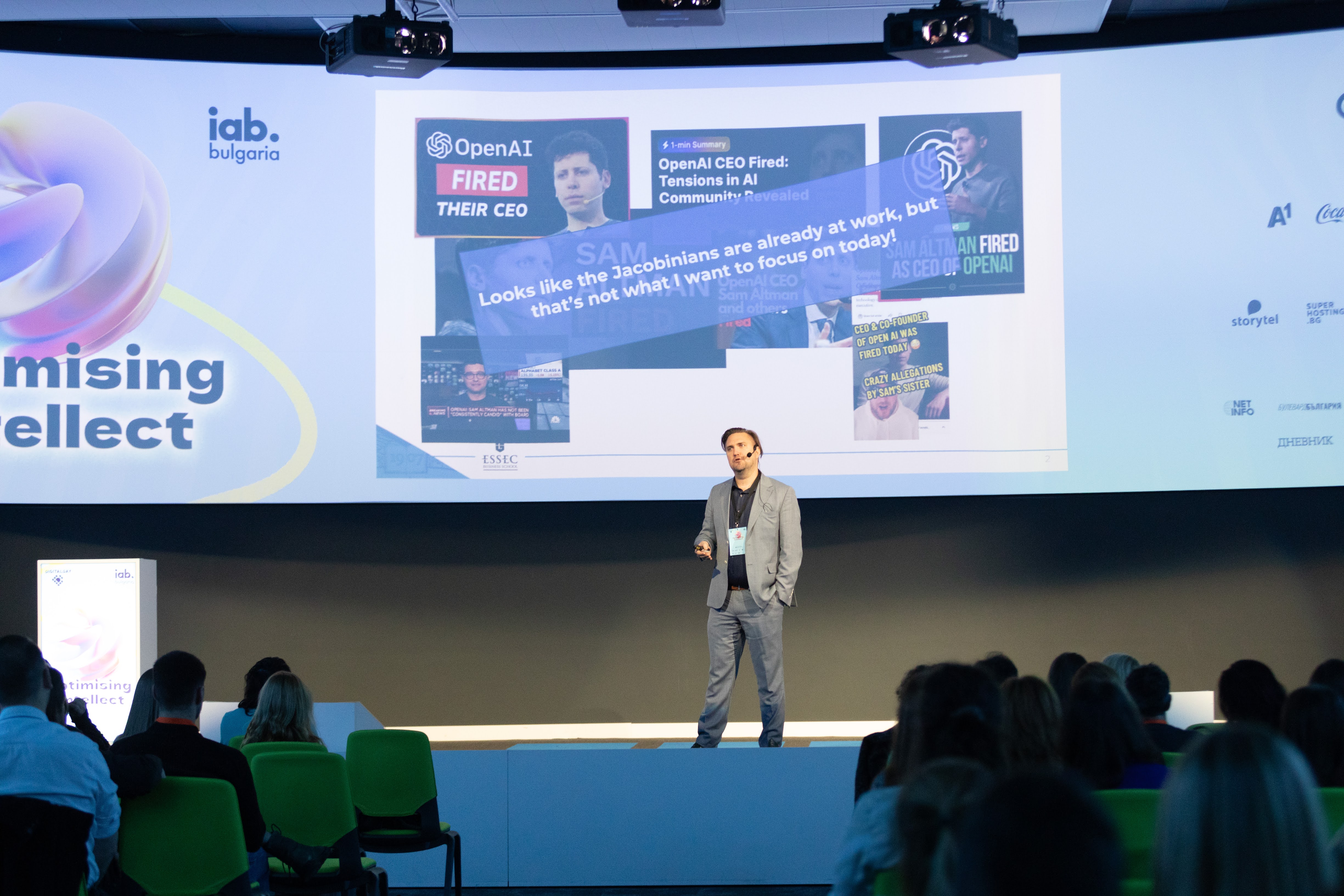
In this provocative keynote, I draw a striking parallel between the ongoing AI transformation and the French Revolution. As with any historic disruption, some heads will roll—while others will rise from the bottom of the digital Marais to rule a new system. Drawing on two decades of digital transformation lessons, I reveal the strategic skills required to become a leading force in the Nouvel Empire rather than facing the guillotine of obsolescence. Building on acclaimed sessions delivered at IAB's International Digital Marketing Day and ESSEC's Open MBA Day, this talk unpacks the critical shift from Mechanical AI to the new frontier of Agentic Intelligence. Book this session to equip your audience with a proven, four-step blueprint for surviving the chaos and maintaining brand sovereignty in the age of automation. ALLONS ENFANTS...
"BI is from Mars, Marketing from Venus." If this dynamic sounds familiar, this keynote is the antidote. I speak both languages because I've lived on both planets: I began my career as an advertising copywriter before pivoting deep into data analytics. Today, I address the systemic "language barrier" that isolates Business Intelligence from Marketing—a divide that routinely leads to missed opportunities and strategic misalignment. Drawing on my extensive consulting background guiding corporate transformations and my experience teaching marketing analytics for world-leading programs (including the globally #2-ranked ESSEC & CentraleSupélec DSBA), I share a proven roadmap for fostering a unified, data-driven culture. I break down how to teach BI teams to embrace the nuances of market orientation, while empowering marketing teams to rigorously quantify their impact. Book this keynote to discover the specific analytical frameworks that enable both teams to move beyond raw metrics and align on the insights that actually win battles.
Beyond the Like: Mastering the Art of Brand Warfare. In this keynote, I leverage the latest research into online trolling and heated debates between brand fans to explain how you can utilize today's "hype echoverse" to create valuable engagement for your brand . So, stop fearing the trolls and start leveraging the rivalry; discover the ADA framework that transforms fan conflict into a powerful engine for engagement and long-term brand growth
(selected projects)
As Academic Co-Director of the Danone Marketing Academy, I champion marketing excellence for a global FMCG leader. My work helps Danone with maintaining its reputation as a marketing powerhouse while supporting its top-tier market position (#1 in dairy/plant-based, #2 in waters/infant nutrition).
Danone
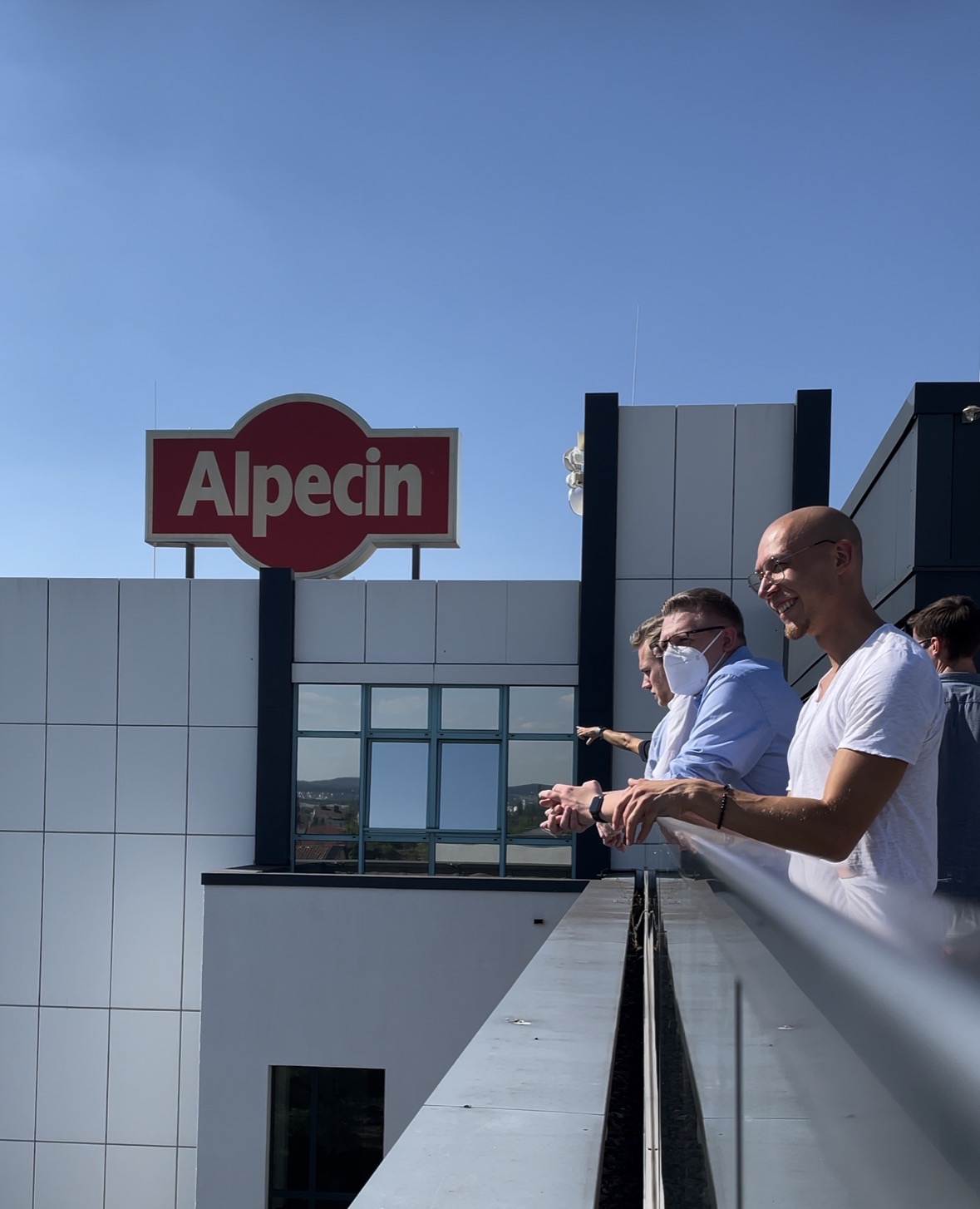
From 2020 to 2022, I supported Dr. Wolff with developing a stronger data-centric decision-making culture, directly supporting their ambition to be a RoI and R&D leader. My work empowered the teams behind iconic, science-backed brands like Alpecin, Plantur, Linola, and Vagisan to leverage data for marketing efficency and sustainable commercial growth.
Dr. Wolff Group
In 2020, I partnered with DB Cargo and Prof. Dr. David Bendig to develop a potential 'Sustainable Transportation Label,' conducting focused research into how green logistics and supply chain transparency directly influence consumer purchase behavior.
DB Cargo
Between 2020 and 2023, I led the Annual Social Media Analysis for DB Cargo, quantifying the ROI of their digital communication. Mapping the digital landscape we helped with identifying key stakeholders and primary opinion drivers within the global logistics sector. As part of this initiative, we created the annual 'LinkedIn Logistics CEO Report".
DB Cargo
Between 2016 and 2018, I partnered with Özyegin University's corporate education team to co-develop and manage specialized marketing programs. Tailoring the curriculum specifically for their consumer glassware and B2B flatglass divisions, I successfully upskilled and empowered more than 90 executives to become the company's marketing specialists, equipped with expertise in STP, pricing strategy, ROI analysis, and CRM.
Sisecam
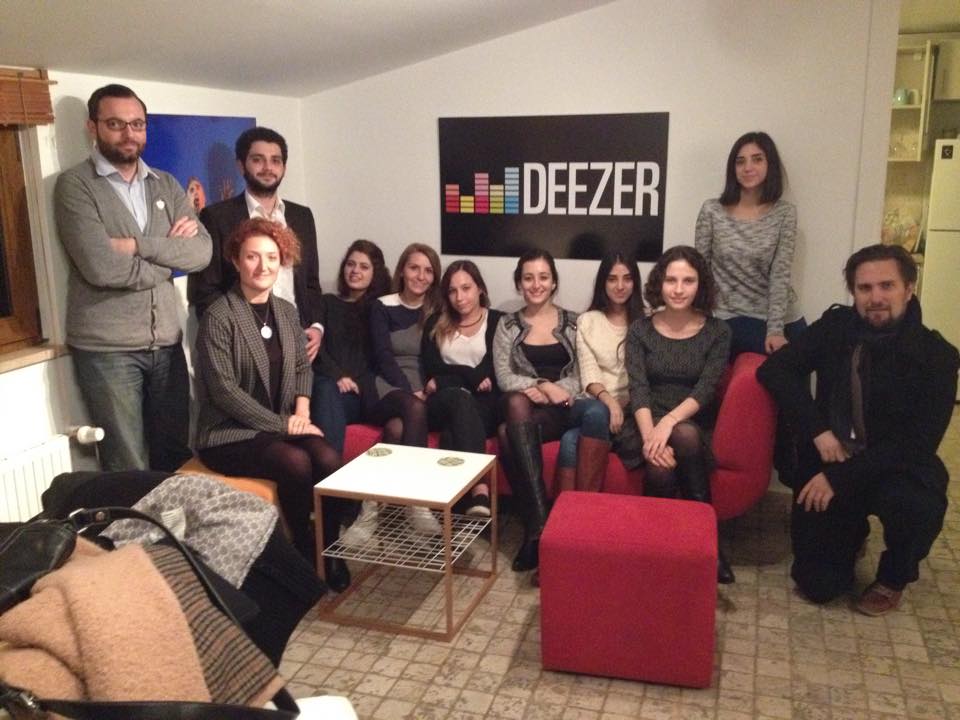
In 2014, I led a student consulting team to advise Deezer Türkiye on their positioning and growth within the Turkish music streaming market. Our research focused on analyzing primary consumer data to determine Willingness to Pay (WTP) and optimize flat-rate subscription models. Furthermore, we identified and evaluated high-impact strategic partnership opportunities with regional telecommunication providers and local artists to accelerate Deezer's market penetration.
Deezer
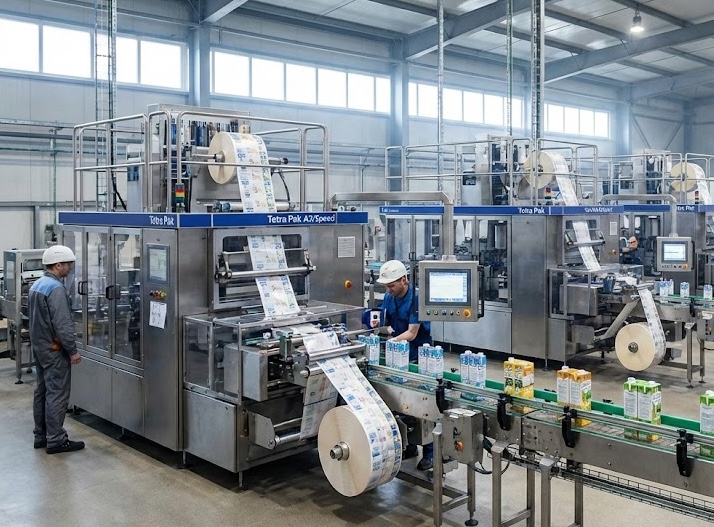
In collaboration with Prof. Koen Pauwels, I developed 2014 an analytical framework for Tetra Pak designed to leverage UGC for tracking consumer mindsets. By mapping this social chatter across the entire decision funnel, we created a robust tool to approximate complex behavioral metrics. This model ultimately empowered the company to accurately measure how specific marketing activities directly shaped consumer perceptions of packaging.
TetraPak
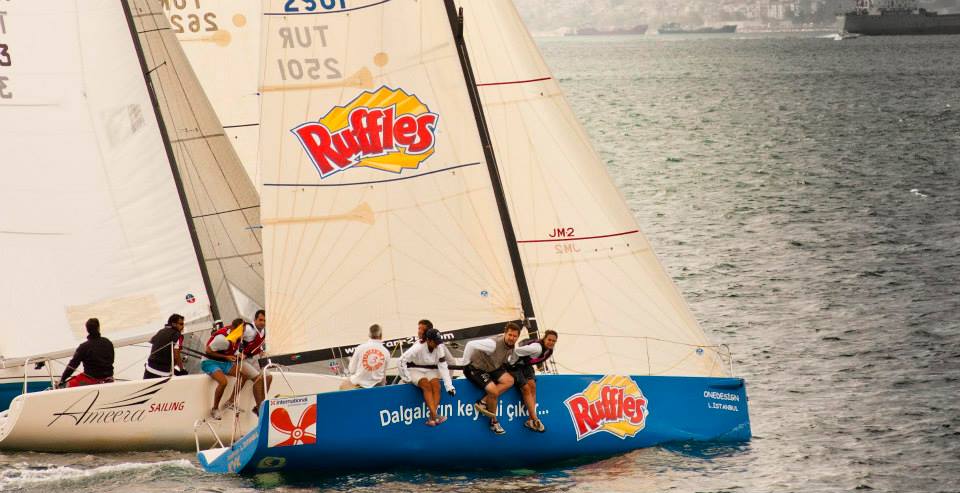
From 2013 to 2015, I partnered with PepsiCo Türkiye to quantify the return on investment of the Ruffles brand's strategic sports sponsorships. Specifically, I evaluated the commercial impact and financial value of their high-profile partnership with the Ruffles Yelken sailing team, led by former Olympian Şükrü Sanus. This data-driven analysis provided marketing leadership with clear, actionable insights to optimize future sponsorship spending.
PepsiCo
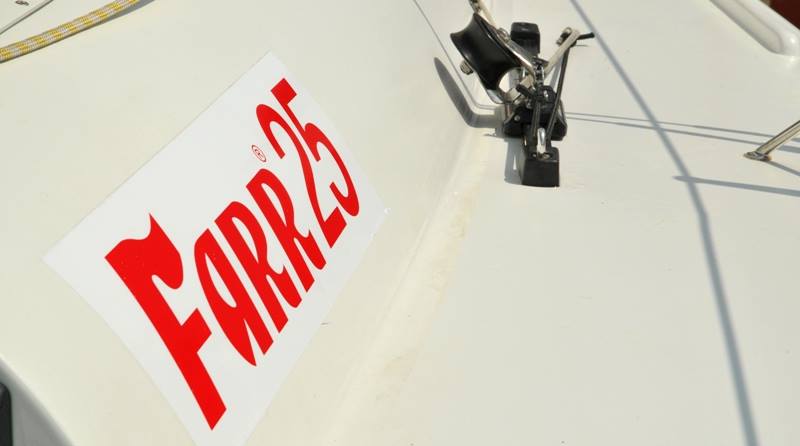
From 2013 to 2018, I developed and managed the global marketing and branding strategy for OD Yachting's Farr25 OD sportsboat. Capitalizing on the boat's 2015 ORC Vice European Championship win, I optimized pricing and executed targeted sales campaigns. This comprehensive approach successfully built international recognition and resulted in the sale of over nine boats across Europe and Australia.
OD Yachting
From 2015 to 2016, I partnered with Izmir-based clean energy company Ergun Elektrik to develop their international brand positioning strategy. By highlighting their engineering excellence alongside a unique, family heritage, we crafted a distinct corporate identity. This strategic realignment successfully established them as a global "flawless harmony power" brand, equipping the company to effectively resonate within the broader international market.
Ergun Elektrik
From 2013 to 2015, I led an executive training program at Vestel, a premier European manufacturer of consumer electronics and household appliances. Over the course of three cohorts, I taught and mentored more than 150 young executives on the strategic fundamentals of crafting successful, highly distinct global brands. By focusing on the execution of integrated 360° campaigns, this curriculum equipped Vestel's emerging leaders with the tools necessary to drive international market growth.
VESTEL
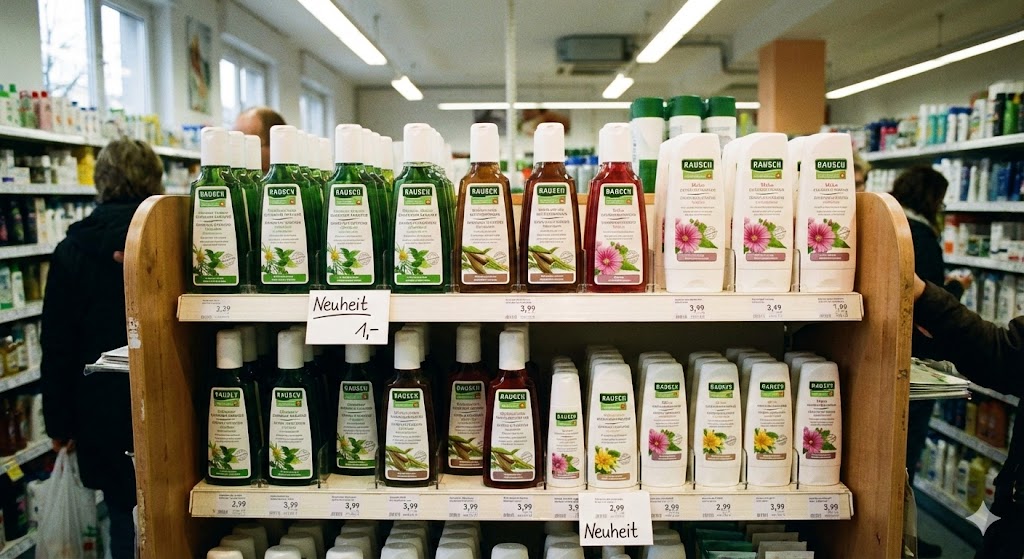
In 2010, I partnered with Rausch Switzerland to develop a deeper understanding of the brand's resonance and overall positioning within German consumer perception. By combining survey data with targeted PoS experiments, we leveraged Multidimensional Scaling to map exactly how Rausch compared against competing shampoo brands. This revealed the critical linkages between brand perceptions and the consumer's overall willingness to pay.
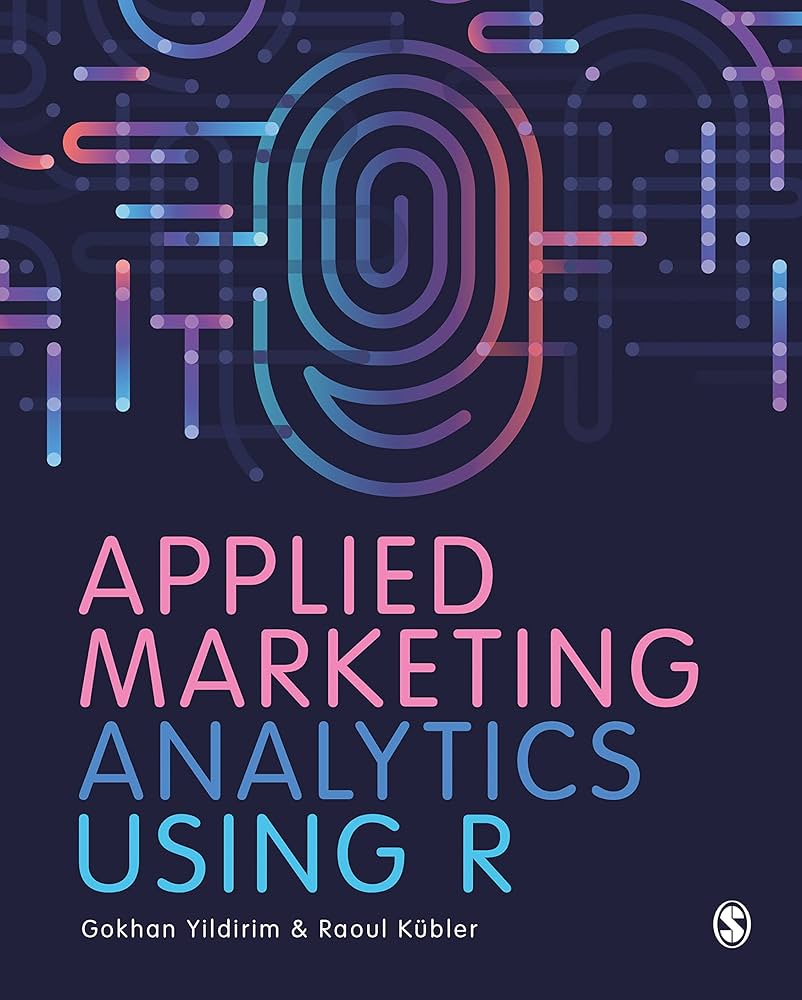
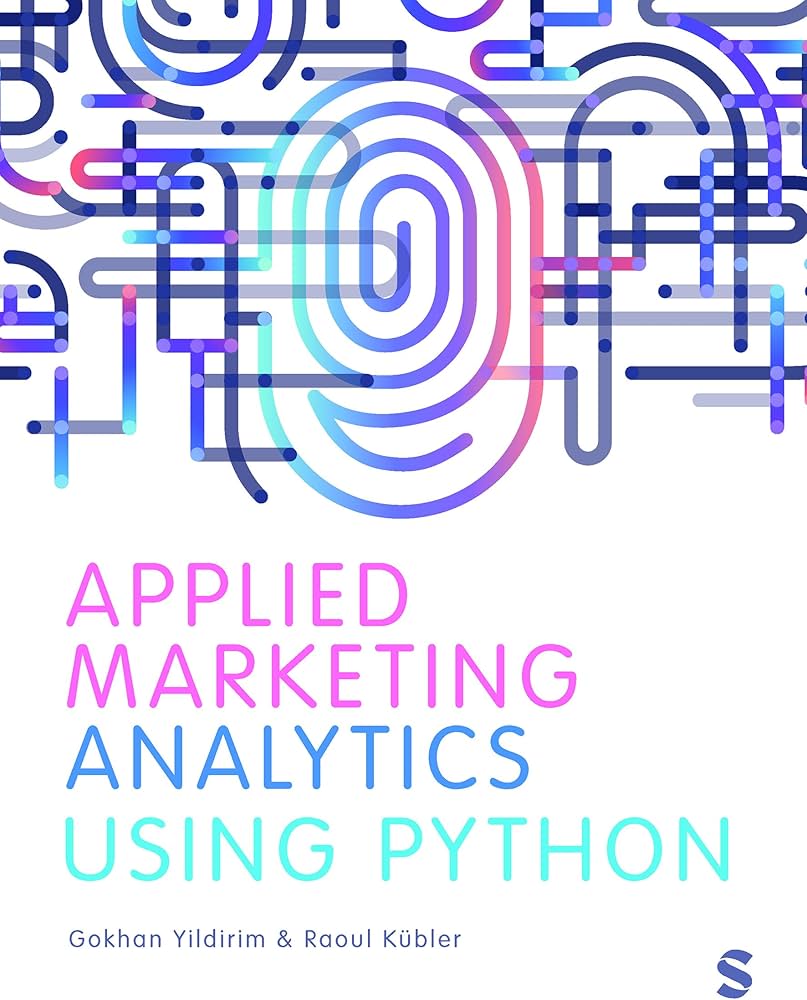
Rausch SwitzerlandThe result of a long-standing collaboration between Gökhan Yildirim and myself, Applied Marketing Analytics (available in R and Python editions) empowers you to conduct state-of-the-art analytics across the entire lifecycle of a marketing campaign. Using real-world datasets and hands-on code walkthroughs (via R Markdowns or Jupyter Notebooks), readers learn to leverage techniques like customer segmentation, marketing mix modeling, attribution, text and image analytics, and demand forecasting for better decision-making.
For Educators: Both editions include a comprehensive, ready-to-use teaching suite featuring detailed PPTs, test banks, quizzes, and teaching notes.
Since its publication in 2023, the book has gained widespread adoption among marketing educators worldwide. Gökhan and I are proud that today, it is a highly valued resource in flagship analytics programs at premier institutions, including Imperial College, London Business School, UCLA, Erasmus Rotterdam, University of Cologne, LMU Munich, Münster Professional School, and CentraleSupélec Paris.
Driven by the enthusiastic response to the R edition, Gökhan and I created a companion version for Python. It features the exact same real-world cases and datasets, with meticulously translated Jupyter Notebooks that maintain our high standards for output quality. Educators can easily use both books side-by-side in the classroom, allowing students to learn in whichever language they prefer. Beyond academia, we are proud that the Python edition is gaining strong traction in the corporate world, actively relied upon by data analysts at Alphabet, Amazon, and Booking.com.